Rewriting Workplace Power Dynamics Through Design
By: Amy Mason
For decades, offices have communicated power through spatial cues: who has a door, who gets daylight, who sits at the head of the table, and who works deep within the floorplate. These signals shape how authority is perceived and exercised, influencing who speaks confidently, who hesitates, and who remains peripheral.
Interior design has never been neutral. It’s always been a social language.
Hybrid work has weakened many traditional status markers, but it has also eroded employees’ sense of place and identity. Flexibility itself is not the problem. The problem is flexibility without the anchors that tell people where they belong.
In theory, reducing perimeter offices should have flattened hierarchies and democratized work. In practice, organizations removed old signals of power without replacing them with new signals of belonging.
The next evolution of workplace design is not about expressing status or maximizing efficiency. It is about redistributing power through identity, visibility, and shared ownership of space.
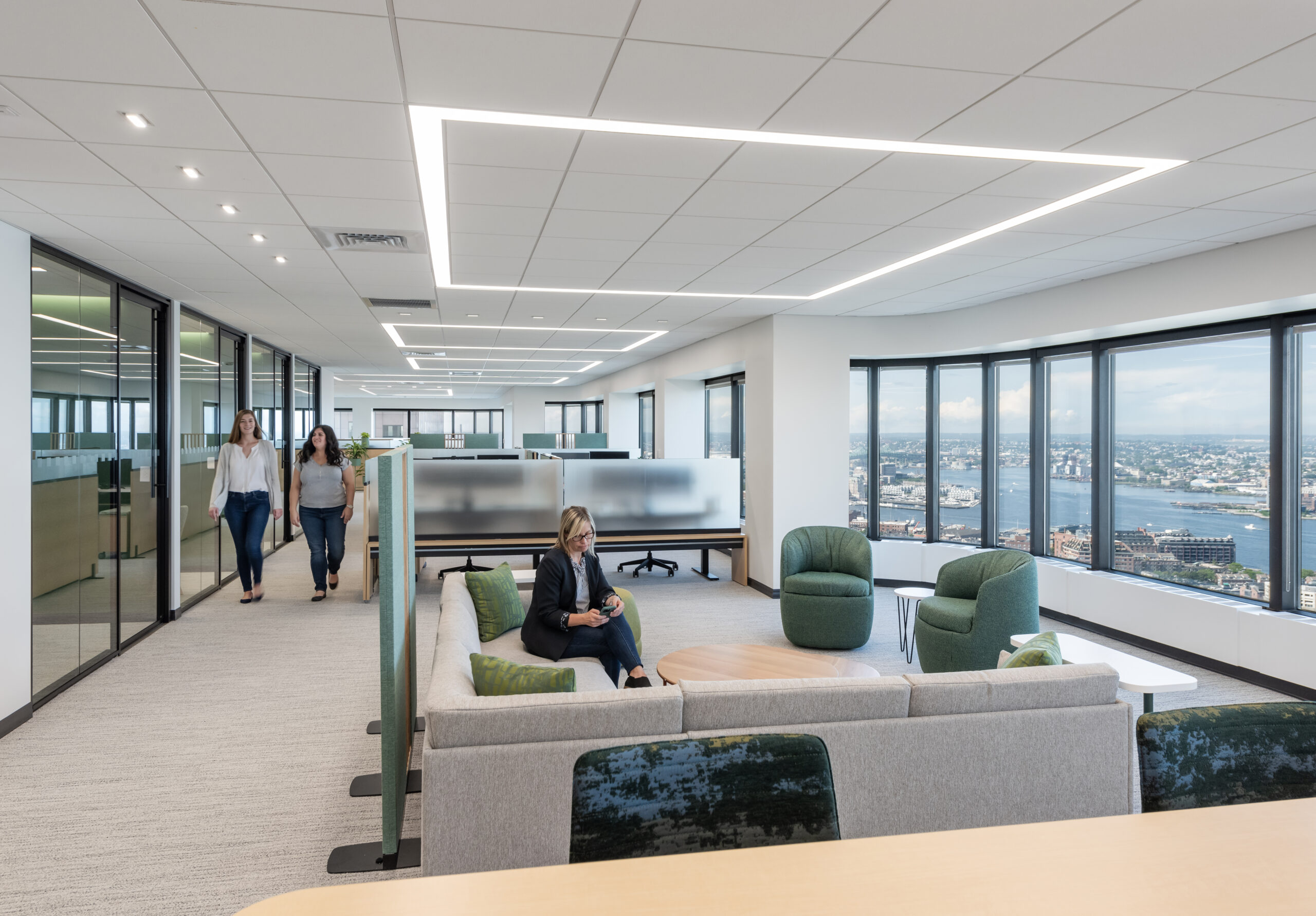
Photographed: Confidential Financial Services Company
The Power of Spatial Hierarchies
In industries like legal and finance, traditional workplace hierarchies remain largely unquestioned. But they create predictable psychological effects: deference, intimidation, territorial behavior, and information bottlenecks. The message is clear: power belongs to those who control space.
Open offices attempted to erase these dynamics by erasing boundaries entirely. But openness did not create equality. Power simply shifted into subtler forms: who dominates conversations, who claims preferred seats, and who feels comfortable occupying shared territory.
Hybrid work intensified the problem. Without permanent desks or consistent presence, many employees lost not only space, but spatial identity. When no place belongs to anyone, belonging itself begins to disappear.
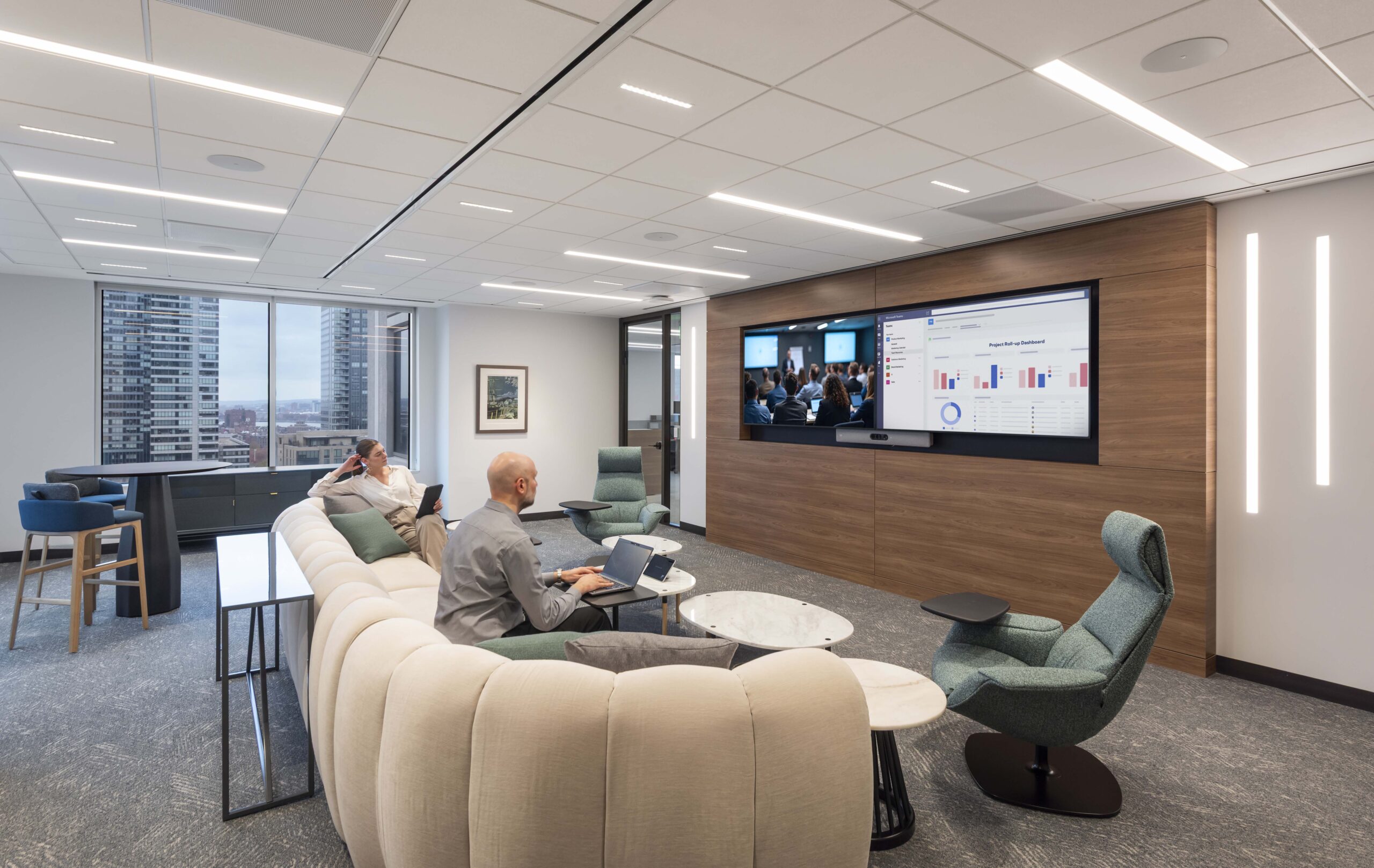
Photographed: Confidential Private Equity Client
The Crisis of Placeless Work
After years of flexible work, many employees no longer know where they fit. This is not nostalgia for assigned seating. It is the loss of anchor points that once reinforced role, team identity, and relevance.
Most workplace strategies still frame flexibility as a logistical exercise: desk ratios, room counts, utilization metrics, and attendance policies. The emotional consequences are often secondary. But people orient themselves socially through space. When spatial cues disappear, uncertainty fills the gap.
That uncertainty has consequences: weaker engagement, reduced psychological safety, slower collaboration, and diminished cultural cohesion. The office becomes a tool people use, rather than a place they identify with.
If traditional offices overemphasized status, hybrid workplaces risk erasing identity altogether.
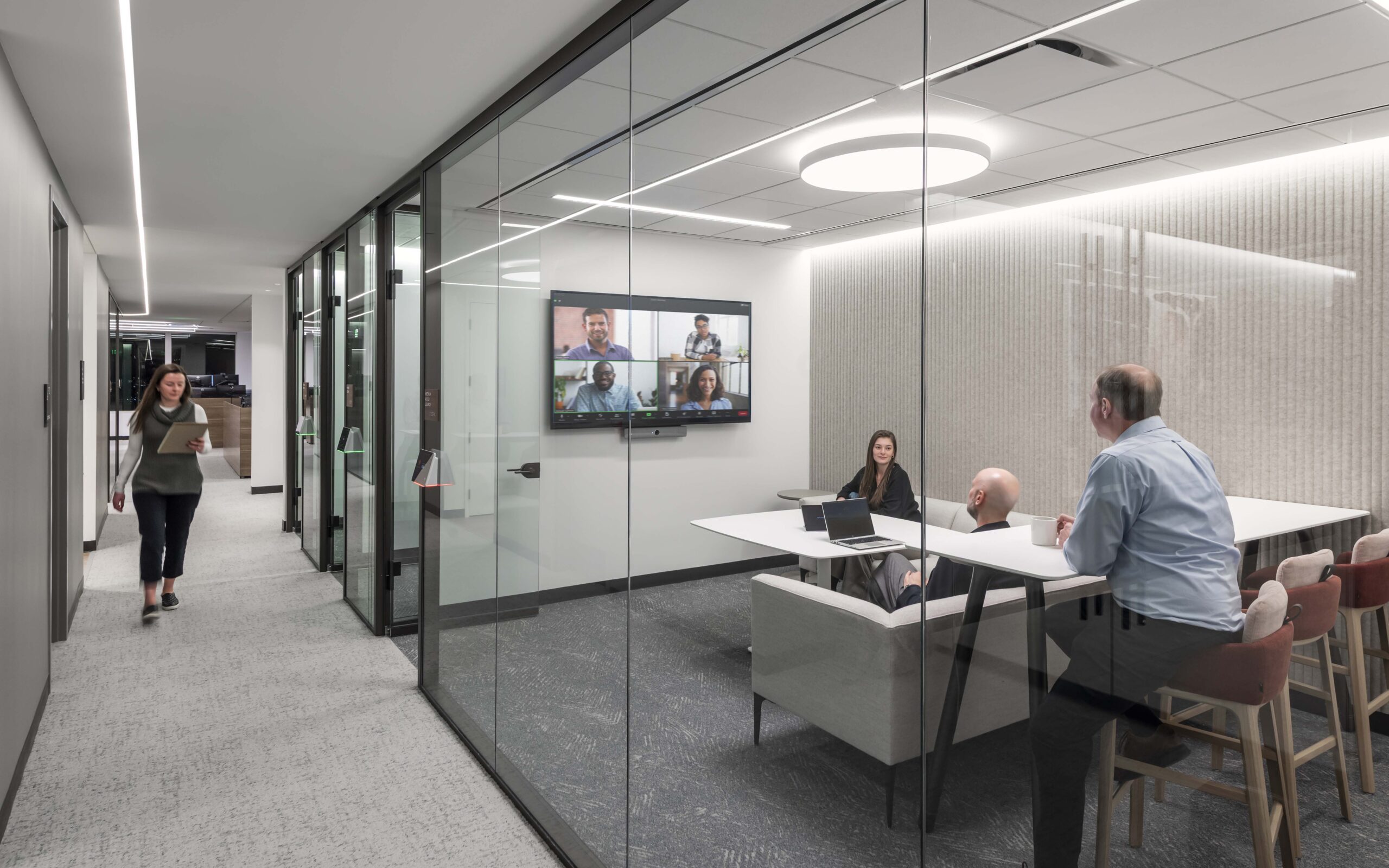
Photographed: Confidential Private Equity Client
The Role of Spatial Anchors
To move forward, workplace design must replace traditional hierarchy cues with something more human and more emotionally attuned: spatial anchors.
Spatial anchors are consistent, recognizable elements that create identity, orientation, and belonging without reintroducing territorial power. They answer three essential questions:
- Who do I belong with?
- How do I work here?
- Where do I belong?
1. Team Home Bases (WHO I BELONG WITH)
The most powerful anchor in the hybrid workplace is the team home base. It restores identity without reverting to territorial ownership. Instead of “this is my desk,” the message becomes: “this is where my team lives.”
What this looks like in practice:
- Clearly defined team neighborhoods with distinct identity
- Persistent surfaces for active work: pin-up areas, writable walls, digital boards, layout space
- Shared informal spaces for quick collaboration away from desks
- No “bad seats” — every seat should feel equally usable and valued
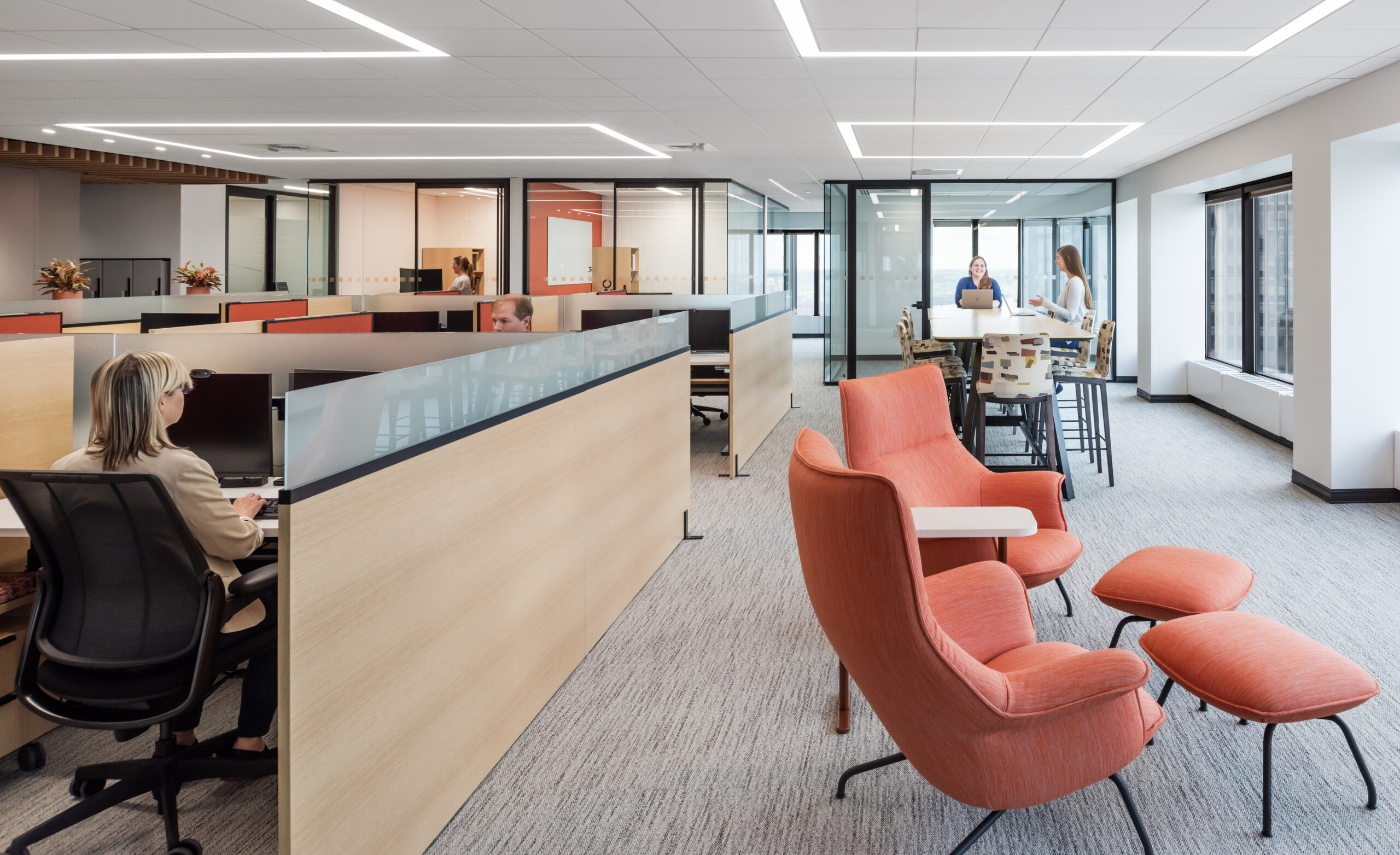
Photographed: Confidential Financial Services Company
2. Ritual Spaces (HOW WE WORK)
Team rituals build belonging faster than rules or branding. Spaces designed around repeated behaviors anchor culture through daily use and reduce the need for constant social negotiation.
What this looks like in practice:
- Standup zones with flexible layouts that encourage equal participation
- Forum spaces for energized collaboration without dominant “head-of-table” positions
- Decision rooms with round tables and surrounding writable surfaces that reinforce shared responsibility
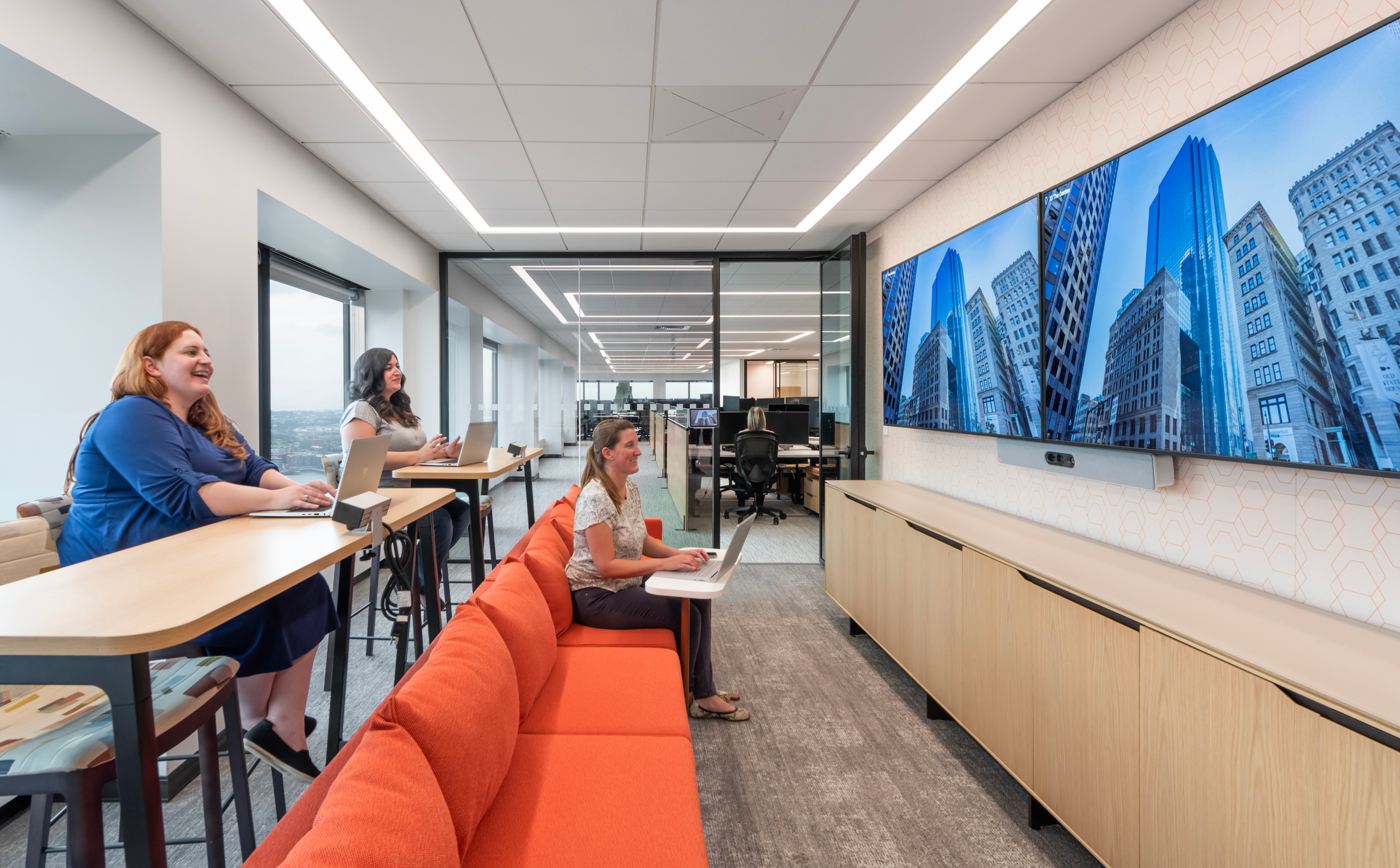
Photographed: Confidential Financial Services Company
3. Landmarks & Wayfinding Anchors (WHERE I BLEONG)
People cannot feel like they belong if they feel lost. Orientation creates comfort, and comfort creates confidence.
In many workplaces, the most confident people are not the most senior — they are the most spatially fluent. They know where conversations happen, which zones feel owned, and how to navigate the environment. New employees and hybrid workers feel this gap immediately.
What this looks like in practice:
- Consistent neighborhood cues through color, lighting, materiality, and furniture orientation
- Repeatable iconography tied to teams, work modes, or functions
- Placemaking elements contributed by teams themselves: books, artwork, photography, artifacts, and in-progress work
These anchors reduce hesitation and create shared spatial literacy. When people know where they belong, they participate more freely.
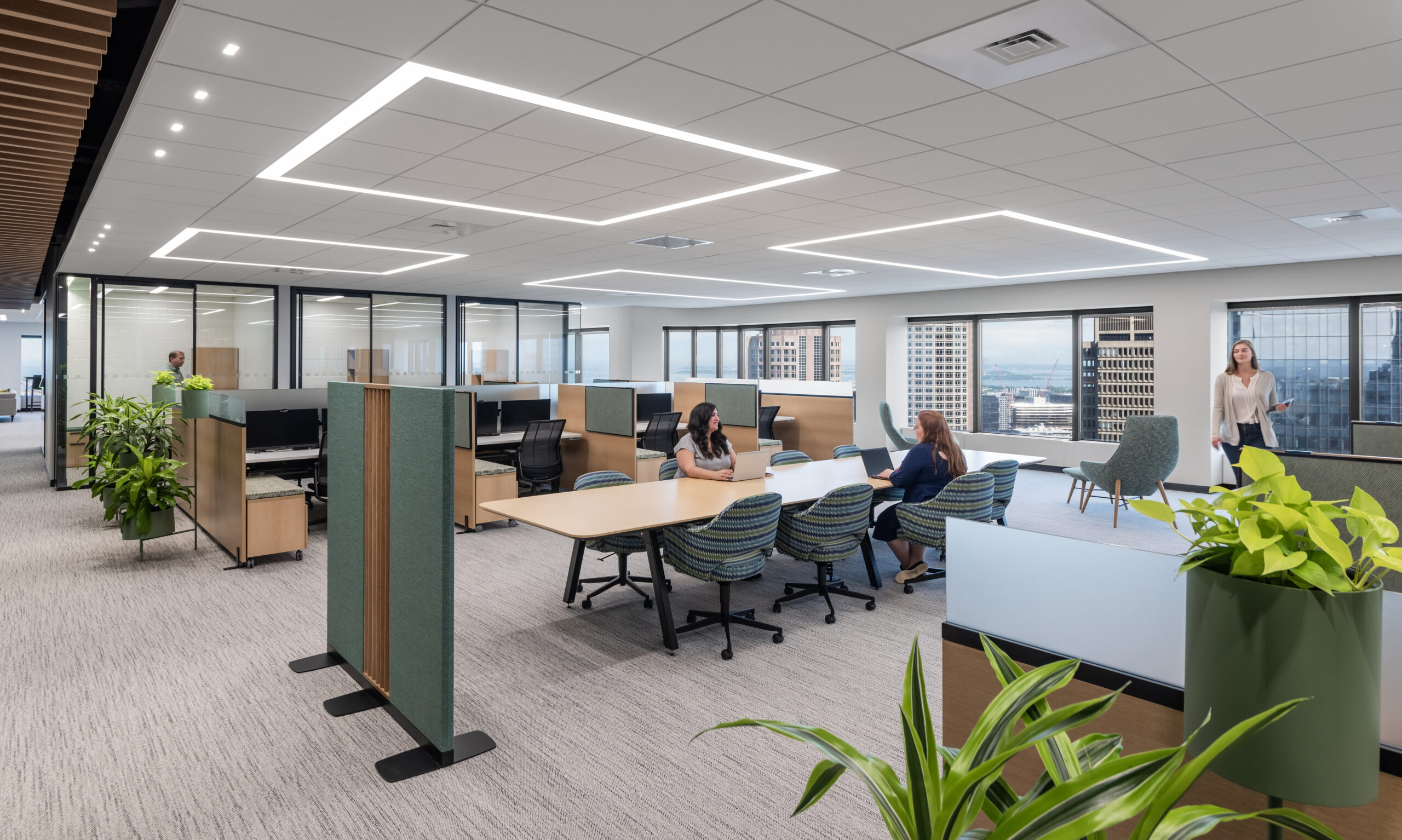
Photographed: Confidential Financial Services Company
Designing for Belonging
The role of the workplace designer has changed. We are no longer planning spaces around hierarchy or efficiency. We are designing for belonging in environments where old spatial cues no longer apply.
At NELSON, we’ve watched this shift unfold across workplace projects nationwide. What we’ve learned is that the central question is no longer, “How much space does this organization need?”
It’s: “Where do its people belong?”
Square footage is a logistical answer to an emotional question. The organizations that succeed in the next phase of hybrid work will be the ones that recognize the difference.
Let's Connect:
Amy Mason, Senior Interior Designer, Workplace
I've spent the past decade becoming a well-rounded designer: skilled at the data-gathering process, knowledgeable about the technical aspects that make a project successful, and experienced at weaving creative storytelling into beautiful workplaces. I've helped design nationally ranked law firms, boutique executive briefing centers, and everything in between. I'm also a Master Gardener, committed to preserving the native landscape of our eastern temperate forests.
