Shallow Bay Industrial: An Overlooked Opportunity Hiding in Plain Sight
By: Adam Bortz
For more than a decade, industrial real estate has optimized itself for scale. As the demand for e-commerce surged and supply chains stretched, big-box distribution and fulfillment centers also needed to scale to respond to that demand. Developers then pushed to pursue massive land parcels to support buildings which required the larger footprints and higher clear heights needed to deliver the capacity tenants had to have to service their customers. The persistence of this “go big or go home” trend has conditioned developers to continue to develop the biggest buildings allowable in order to maximize their land value, rental rates, and returns.
In doing so, the market has largely passed over a different—and increasingly important—industrial user. The little guy.
For this reason, shallow bay industrial has become almost a niche. It represents a fundamental gap between how developers want (and in many cases need) to develop in order to remain fiscally viable, as well as deliver what an attractive segment of tenants are looking for. While, as of January 2026, we’re on the cusp of a shift in the market toward the positive direction, larger industrial users are still seeing a higher percentage of vacated space compared to smaller industrial users. For tenants over 100,000 SF, the national industrial vacancy rate still sits near 9.7% per CommercialCafe’s 2026 U.S. industrial market report¹, while vacancy for tenants under 100,000 SF is estimated at 4.4% range per Cushman & Wakefield’s Q2 2025 U.S. Industrial Market report. This underscores that overall market conditions, while in transition, depict that smaller user demand remains hotter in comparison to larger user demand.
“The market still desires big, headline users, but many are taking longer to commit as they more deliberately evaluate their real estate needs against today’s large-format supply,” explains Mark Tang, Managing Director, Development and Construction. “In contrast, smaller users, often backed by private equity or seeking greater operational flexibility, are driving absorption in infill and supply-constrained markets. That dynamic increasingly favors shallow bay industrial footprints over bulk space, but only for developers able to navigate complex site constraints or the economics of atypical, redevelopment-driven acquisitions.
What Do We Mean by “Shallow Bay”?
The term “shallow bay” is often used interchangeably with “small bay” or “micro bay”, which can create confusion. At NELSON, we define shallow bay by as much of a design philosophy as we do a set of physical dimensions.
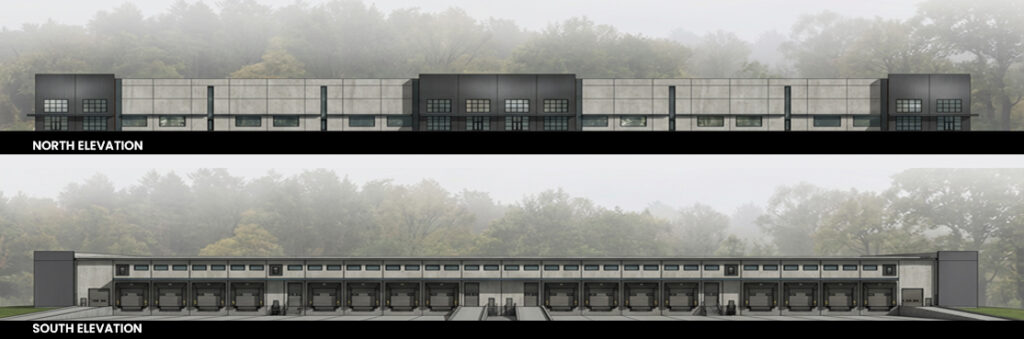
At its core, shallow bay industrial is about creating a building format that is intentionally designed to support multiple smaller tenants. That means focusing on conducive operational proportions, not just total square footage. Rather than demising leftover space from a large speculative warehouse into long, inefficient “hot dog” units, shallow bay buildings are designed flexibly from day one to divide well.
While there’s no hard rulebook, we find that typical shallow bay characteristics include (but are not limited to):
- Smaller overall buildings, often in the 75,000–125,000 SF range, designed to accommodate four to eight tenants
- Shallower building depths—usually 80–120 feet, with 100 feet often proving to be a sweet spot for efficient column spacing
- Rear-loaded configurations, most often with at-grade dock doors
- Lower clear heights (typically 18–22 feet) that are more aligned with tenant needs at smaller scales
- Higher office-to-warehouse ratios, which often translates to more glass and multiple entries along the front elevation
From a design perspective, shallow bay requires more initial planning. Because tenant configurations will change over time; life safety, egress, and MEP systems must be designed for maximum variability, not a single static layout. Understanding all of the possible scenarios and space configurations is paramount when programming the building. The result is an asset that can evolve without major disruption or decisions needed as tenants come and go.
The design implications of shallow bay facilities stem from how their users are operating, and more specifically, where they’re operating. Large distribution centers serve national or multi-state networks with high volumes of goods moving through dock bays less frequently. Shallow bay tenants operate very differently. Their geographic radius is tighter, and their buildings function as daily hubs – almost like hives. Trades and service providers—plumbers, electricians, pipefitters, light manufacturers, regional specialty operators—may visit their space multiple times a day, moving smaller quantities of goods but relying heavily on convenient access and functional layouts to operate. Designing for that reality is where shallow bay excels – every component from the square footage, to the on-grade loading docks are more conducive to the needs of businesses that require shorter trips from A to B as well as serving a higher frequency of those trips.
A Business Model Disconnect
Despite more than 382 million square feet of industrial space currently under construction and over 265 million square feet completed in 2025 per the CommercialCafe report, much of that new inventory continues to emphasize large, conventional-bay logistics buildings rather than smaller, flexible shallow bay formats.
So why aren’t more shallow bay buildings being developed?
From a development standpoint, shallow bay often gets a bad rap. The time required to obtain land, move through the entitlement process, and solve for issues like off-site improvements are largely the same—if not higher on a per-square-foot basis—than those of large-scale development projects. Lease economics also work differently: smaller deals, shorter lease terms, and a longer runway to recoup investment.
For large, institutional developers accustomed to quicker payback periods and simplified operations, shallow bay often doesn’t pencil the same way. The biggest national issue facing shallow bay development isn’t one of demand; it’s financial models that are limiting it’s supply.
During the CRE boom of the last cycle, developers targeted a bulk of their revenue to come from the sale of physical real estate itself. And why wouldn’t they, industrial real estate valuations increased by about 35% from 2020 to early 2022, according to MSCI / Real Capital Analytics CPPI. This was made possible by historically low interest rates coupled with a massive spike in demand. As we look forward though, demand has softened but stabilized, and interest rates are thought to have settled in to their cruising altitude for the remainder of the flight. Have the tides turned from a transaction being the focus for developers, to more of an emphasis on the income that the physical asset generates? Per a recent BisNow article, Income Analytics Chief Executive Matt Richardson seems to think so.
“I think income is going to play a bigger part in terms of the percentage of the overall return,” Income Analytics Chief Executive Matt Richardson said. “So, I suspect you’re looking at lower returns, and a bigger percentage of that will be coming from the cash flow.”²
Who Shallow Bay is Really For
To reap the full benefit of the shallow bay format, the developers that are positioned to hold these investments for a longer period of time will see more upside than merchant builders who are looking to construct and sell quickly. The former tend to be more comfortable with more hands-on operations over a longer period of time, the business model of the latter doesn’t lend itself to holding properties long enough to extract that type of value. One of the downsides that come with managing these smaller tenant leases is that their durations are often shorter, and there’s a higher quantity of them – which can make owners feel like they have to keep a lot of plates spinning constantly. That may make larger developers – even if they are geared up to hold their assets for the long term – turn the other cheek as it requires much more attention to a finer level of detail. While managing multiple tenants requires more involvement, the income these facilities generate over the long term can make them attractive for a developer of the right size. Shallow bay rewards patience, proximity, and participation—not scale alone.
Shallow bay tends to perform best for:
- Smaller, regional developers
- Long-term owner-operators
- Firms that own and manage their assets
Why a Productized Approach Matters
At NELSON, we see even greater value in a repeatable, productized shallow bay approach, particularly for developers with the scale to deploy it across multiple sites. Similar to how retail rollouts benefit from standardized planning and implementation, we think that shallow bay can leverage a kit-of-parts mindset to improve speed, flexibility, and efficiency.
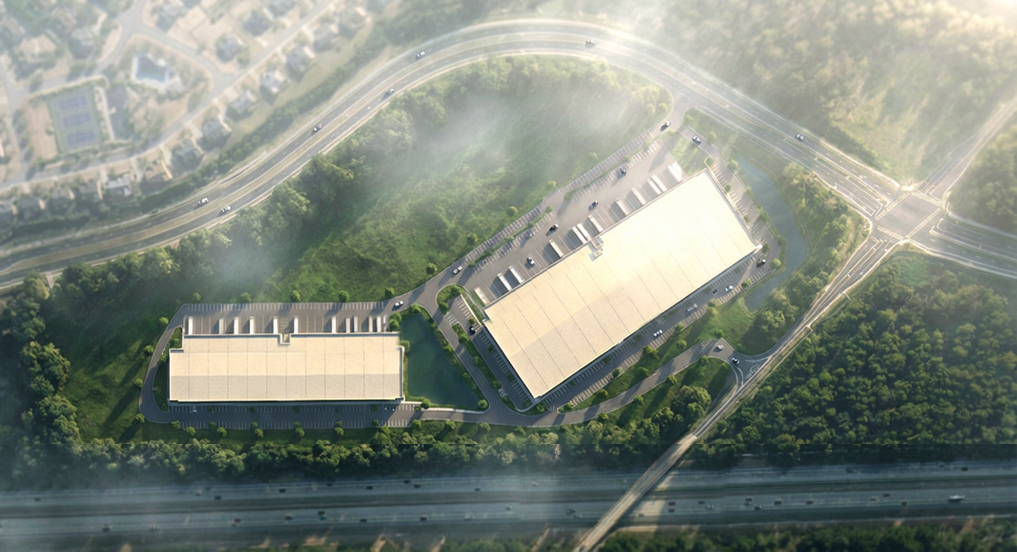
Standardized planning logic, diagrammatic demising strategies, and clear rules for expansion and implementation allow developers to move faster—while still responding to local market needs. Over time, this approach can unlock meaningful economies of scale in both design and construction.
Why Shallow Bay Matters Now
Quite simply – it directly addresses a tenant need that has quietly grown in the industrial market. While development over the past decade has overwhelmingly prioritized scale—larger footprints, higher clear heights, and fewer tenants—the strong demand that smaller tenants continue to generate cannot be ignored. Vacancy data reinforces this imbalance: large-format industrial space remains comparatively soft (but stabilizing), while sub-100,000 SF users face persistently tighter availability. Shallow bay fills this gap by aligning building design with how service-oriented, regional, and trade-based businesses actually operate—frequent daily trips, smaller shipments, higher office needs, and proximity to customers.
At the same time, the broader investment environment is shifting. As returns become increasingly driven by durable cash flow rather than rapid asset appreciation, shallow bay’s multi-tenant, high-demand profile becomes a strategic advantage for the right owners. These buildings reward long-term thinking, operational engagement, and proximity to local markets—qualities that are growing in importance as interest rates stabilize and underwriting assumptions become more realistic. In short, shallow bay isn’t an overlooked niche anymore; it’s a timely response to where industrial demand, tenant behavior, and real estate economics are converging.
At its core, shallow bay industrial isn’t about building smaller buildings. It’s about building smarter, more flexible ones—for the users who need them most.

Let's Connect:
Adam Bortz, Director | Practice Strategy Leader
Bortz brings a wealth of experience to NELSON, having worked in the architecture and design industry in various capacities. A graduate of Thomas Jefferson University and a Controlled Environment Building Association (CEBA) Professional, Bortz honed his skills at Roberson Butz Architects before making notable contributions to flagship projects for Tommy Hilfiger, innovative store concepts at IKEA, and impactful developments for clients including Dick’s Sporting Goods and Chick-fil-A.
