Designing for Experience: The Future of FSEDs
By: Doug Roeder
As Freestanding Emergency Departments (FSEDs) evolve, one of the most powerful shifts is the growing emphasis on designing for experience. At NELSON Worldwide, we help health systems shape FSED environments that not only accelerate care delivery but also reduce stress and enhance clarity in the moments patients and caregivers need it most.
Designing calm within inherently chaotic settings requires a thoughtful integration of architecture, sightlines, acoustics, daylight, and materiality. These elements work together to create environments that support quick decision-making, minimize confusion, and foster a sense of safety.
This is especially critical as FSEDs increasingly serve individuals experiencing behavioral or mental health crises. With the 2026 FGI Guidelines introducing expanded requirements around behavioral & mental health, health systems must rethink how emergency environments can better support dignity, privacy, and predictable operations. NELSON Worldwide is already helping clients interpret and implement these changes, designing exam rooms, arrival spaces, observation areas, and staff pathways that anticipate complex behavioral needs without feeling institutional or restrictive. The result is a setting that protects safety while preserving humanity.
The Architecture of First Impressions
A patient’s first moments in an emergency setting are emotionally charged, and the built environment shapes how those moments unfold. Our team of experts reimagine the entire arrival sequence—from parking to check-in to triage—to improve clarity, reduce friction, and build trust.
Thoughtfully choreographed transitions help patients feel a sense of control during critical moments, while also improving throughput for clinical teams. Clear sightlines, intuitive circulation, and transparent processes create an arrival experience that feels predictable rather than overwhelming. When designed with intention, these early experiences set the tone for the care that follows.
NELSON Worldwide’s Healthcare team used the concept of first impressions as a guiding light for Leon Medical Centers Homestead, where the adaptive reuse of a former theater required a complete rethinking of the arrival experience. By introducing new cantilevered canopies and distinct, navigable entrances, the design clarifies the patient journey from the curb to the clinic, ensuring the arrival feels predictable rather than overwhelming. When designed with intention, these early experiences set the tone for the care that follows.
Wellness-Centered Design for Patients and Caregivers
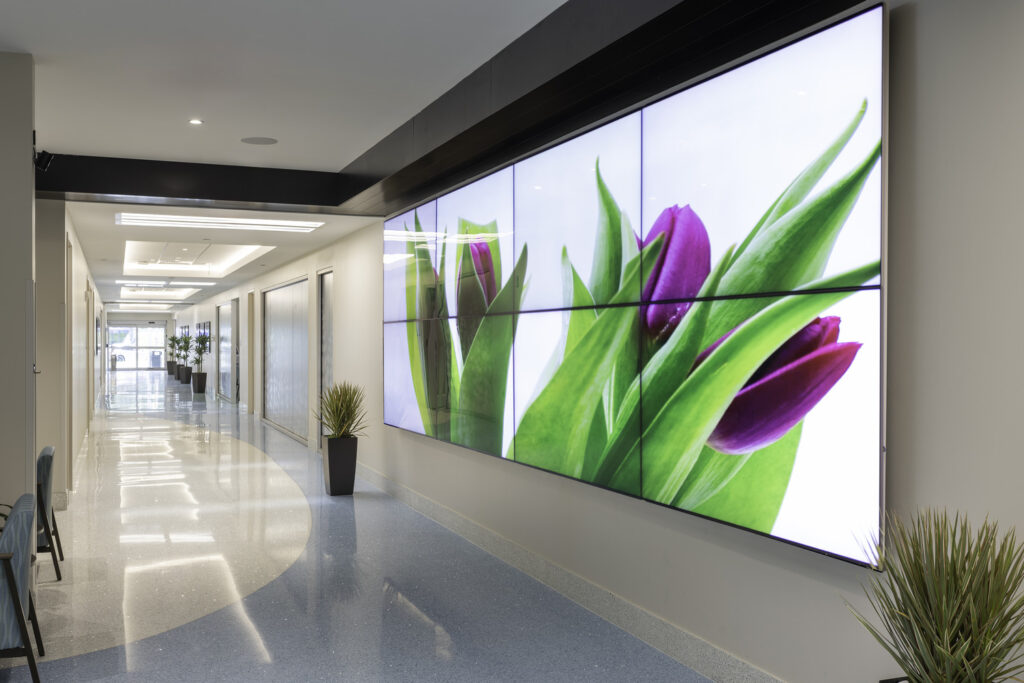
Emergency care environments can and should support wellbeing. By integrating biophilic cues, hospitality-inspired comfort, and design strategies rooted in behavioral science, our team brings wellness to the forefront of FSED planning.
Natural textures, restorative lighting, access to daylight, and thoughtfully scaled spaces help patients and families feel more grounded during moments of crisis. Just as important, these elements create more supportive environments for caregivers, improving morale, minimizing burnout, and enhancing overall team performance.
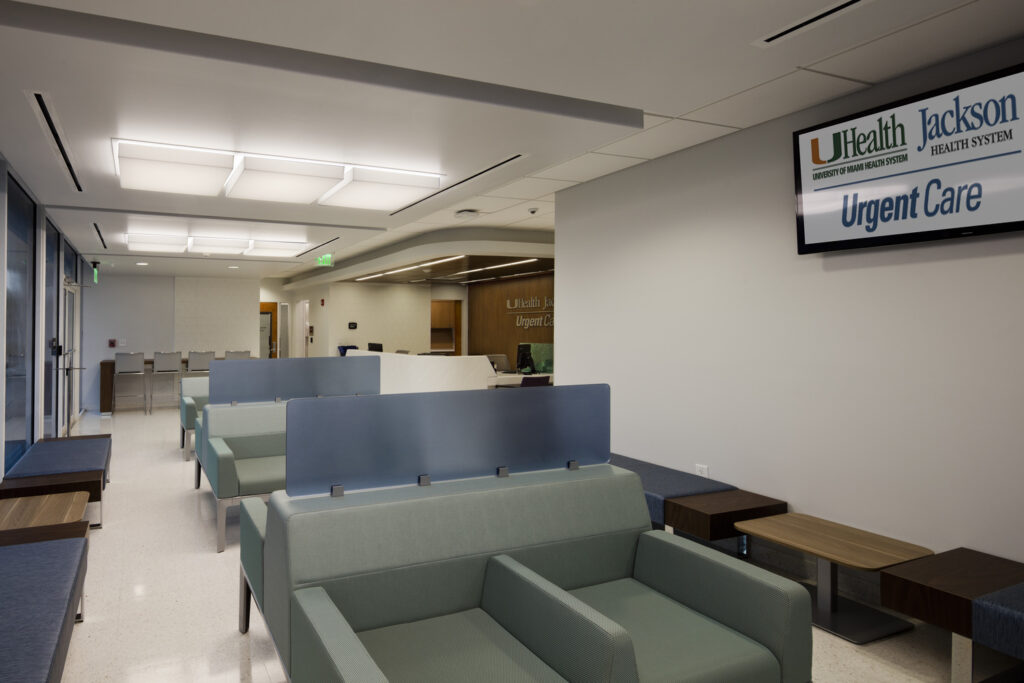
At Jackson Health System Urgent Care – Arch Creek, our team’s design balances clinical efficiency with a bright, welcoming atmosphere. The design maximizes natural light and introduces flexible seating options including high-top tables for working to normalize the waiting experience. The reception area is intentionally configured to be both inviting and private, reducing the institutional feel while ensuring patients receive seamless care from the moment they arrive.
Across all of our work, our focus remains clear: to help health systems create FSEDs that deliver operational excellence while elevating the human experience. Emergency care is about more than clinical outcomes—it is about how people feel the very moment they walk through the doors.
Learn more about NELSON’s Healthcare Practice Here.

Let's Connect:
Doug Roeder, Practice Strategy Leader, Healthcare
Doug brings more than 30 years of experience leading healthcare projects nationwide, including academic medical centers, cancer care facilities, ambulatory clinics, and acute care hospitals. His expertise spans the entire project lifecycle, with a focus on patient-centered, evidence-based, and operationally efficient design.
In addition to healthcare, Doug has contributed to projects in higher education, civic, federal, mixed-use, commercial, and industrial sectors. Known for his collaborative, hands-on leadership style, he thrives on working closely with teams and clients to deliver innovative, human-centered environments that support both people and performance. Reach out to him at DRoeder@nelsonww.com
