Beyond Tuition: How Campus Real Estate Can Generate New Revenue
By: Ina Bachmann
Higher education leaders are under pressure to make their campuses work harder. Rising operating costs, aging facilities, deferred maintenance, shifting enrollment patterns, and increased competition for students are forcing institutions to rethink how every building, parcel, and gathering space contributes to long-term value.
For many institutions, the opportunity is already on campus. Conference centers, event venues, athletics-adjacent facilities, hospitality assets, and underutilized buildings can become year-round destinations that generate revenue, strengthen community partnerships, and enhance the student and visitor experience.
NELSON helps institutions turn existing and future campus assets into places that support both mission and financial resilience.
From Underused Space to Strategic Asset
Campus real estate has traditionally been viewed through the lens of academic need: classrooms, labs, offices, student centers, athletic facilities, and support spaces. Those functions remain essential. But forward-thinking institutions are looking beyond those traditional functions to unlock new sources of value.
The Association of Governing Boards of Universities and Colleges has emphasized that higher education real estate should be treated as a strategic asset connected to mission, financial sustainability, student success, and long-term institutional strategy. The Teachers Insurance and Annuity Association of America Institute (TIAA) found that real estate and auxiliary enterprise activities are among the fastest-growing sources of non-tuition revenue for higher education institutions, underscoring the potential for campuses to leverage land and facilities to generate meaningful income while still advancing mission-driven goals.
That dual purpose is central to revenue-generating campus destinations. A conference center can support continuing education, alumni engagement, fundraising, workforce development, and community events. An athletics-adjacent district can extend game-day energy into year-round dining, hospitality, entertainment, and partnership opportunities. An underutilized building can become a new front door for public engagement.
The strongest projects begin with a clear question: How can this asset serve the institution financially, operationally, and experientially over time?
Designing for Year-Round Use
Successful revenue-generating destinations are designed around multiple audiences and multiple dayparts. Students may use a space during the week. Faculty and staff may rely on it for meetings and programs. Alumni, donors, employers, and community organizations may activate it during evenings, weekends, and seasonal events.
NELSON’s work with Chattahoochee Technical College’s Building H Conference Center demonstrates this approach. After extensive water damage left the building vacant for two years, the college partnered with NELSON to transform it into a 12,300 SF conference center with a multi-functional hall for up to 200 guests. The renovated facility supports large lectures, breakout sessions, academic programs, fundraisers, and community events, with upgraded audiovisual systems, classrooms, offices, a catering kitchen, and more.
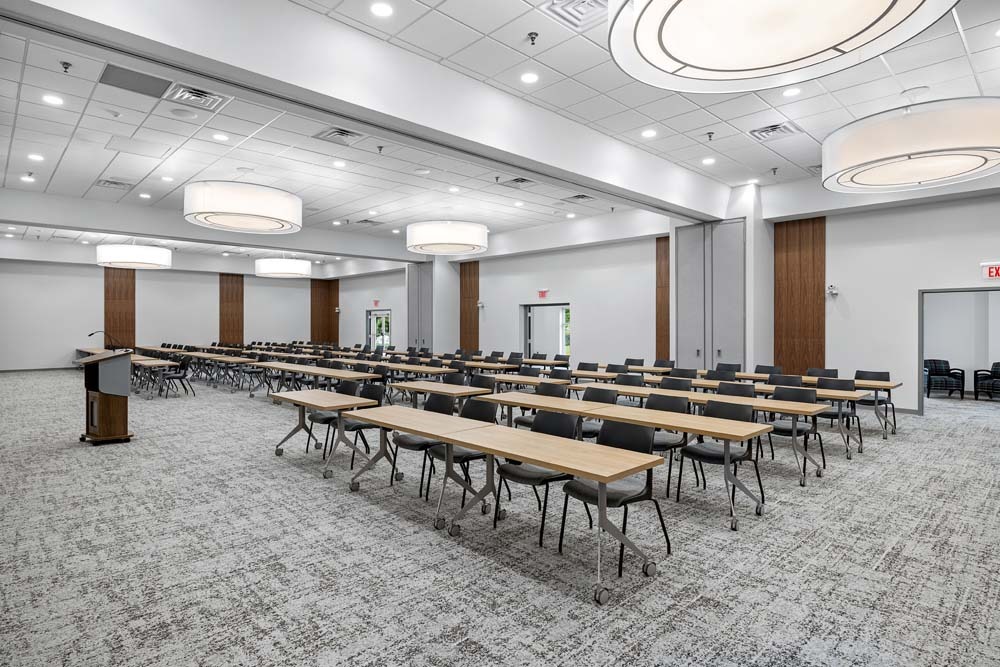
For owners, revenue potential should be considered at the beginning of planning, not after design decisions are already made. Capacity matters, but so do arrival experience, acoustics, catering access, back-of-house planning, storage, flexible furniture, parking, wayfinding, and operational flow. When these elements are coordinated early, a facility can host more types of events, serve more users, and perform more consistently.
Extending the Campus Into the Community
Some of the strongest opportunities sit at the edge of campus or just beyond it. Facilities near public roadways, athletic venues, parking, hospitality corridors, or community amenities can help institutions create destinations that are accessible to students and the public.
Georgia Southwestern State University’s Griffin Bell Golf & Conference Center shows how an off-campus asset can support both institutional and community goals. The 13,000 SF facility replaces a former community landmark that fell into disrepair after years of vacancy. The new center’s design integrates revenue-generating features such as event spaces, retail, and food and beverage services, allowing the facility to operate as a self-sustaining asset for the university. The Entrepreneurship Center provides a dedicated environment for emerging business leaders to collaborate, utilizing open coworking areas, private offices, and meeting rooms designed to foster innovation and knowledge sharing among students and local business leaders.
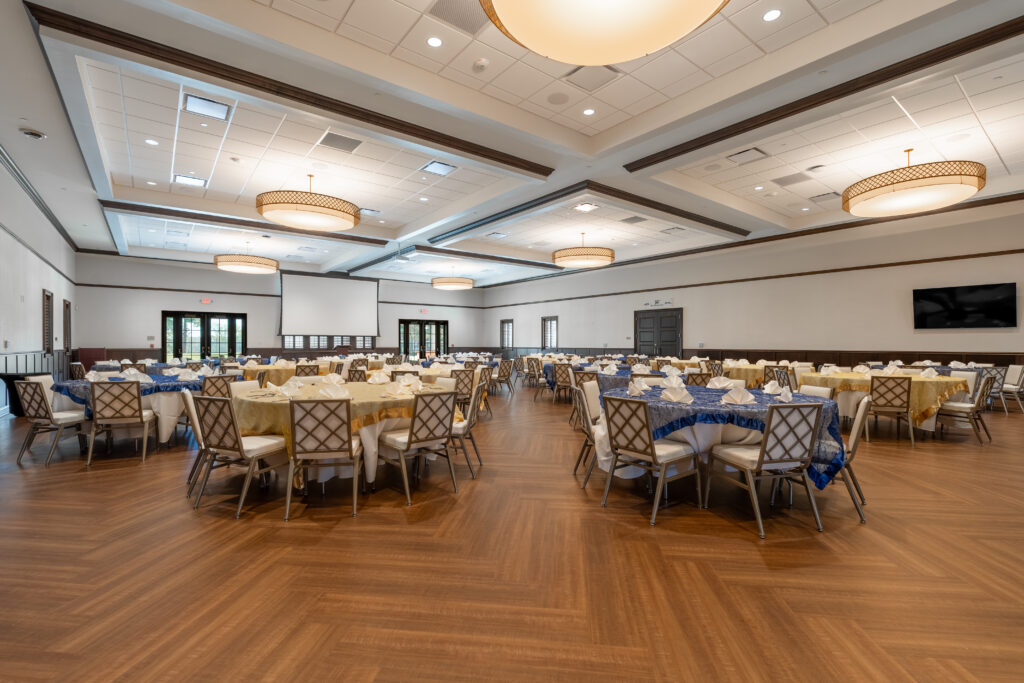
For regional universities, technical colleges, and institutions seeking deeper economic development partnerships, this type of destination can be especially valuable. It allows the campus to serve as a civic anchor while creating new points of entry for alumni, employers, prospective students, and local partners.
Athletics as an Anchor for Long-Term Value
Athletics-adjacent development is becoming an increasingly important strategy as institutions look for new revenue sources and stronger visitor experiences. Evolution of collegiate athletics are adding financial complexity for athletic departments and universities, and sport-anchored mixed-use real estate is one way institutions can respond to changing revenue pressures.
Athletics create predictable moments of activity and emotional connection. The opportunity is to extend that energy before, after, and between events.
That may include hospitality near stadiums, restaurants and retail that serve campus and community users, conference space tied to alumni and donor events, branded gathering areas, recreation amenities, or mixed-use districts that connect major campus anchors.
NELSON’s work on The Grounds at Wake Forest University reflects this broader potential. Planned on 100 acres of university-owned land, The Grounds includes office, residential, retail, dining, activated green space, and commercial opportunities that strengthen the university’s connection to the surrounding community well beyond game day.
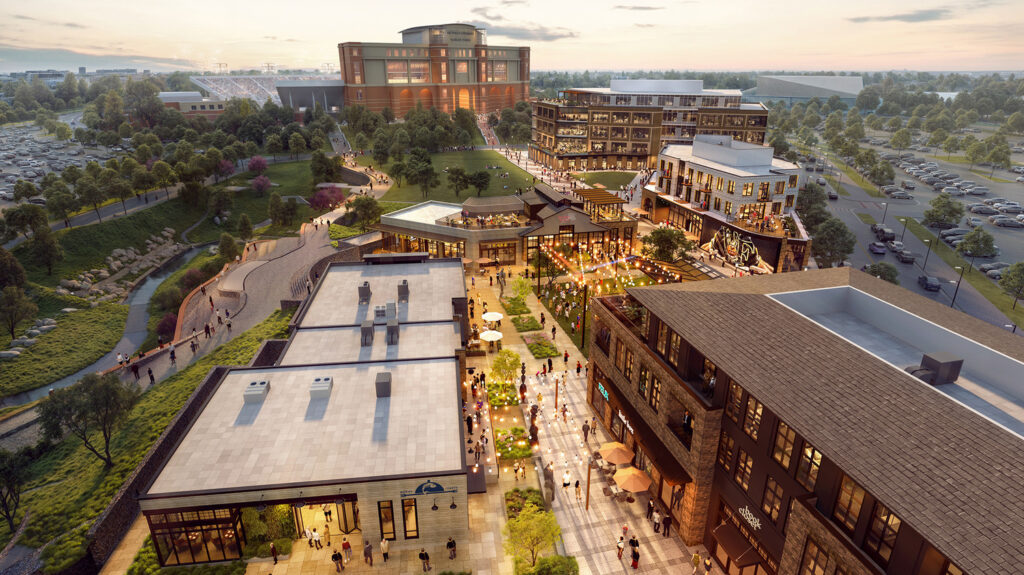
As a strategic partner NELSON plans revenue-generating assets around connected destinations that combine event activity, public realm, hospitality, dining, conferencing, athletics, and community use.
Designing Smarter Campus Assets
Higher education leaders are facing a clear challenge: campuses must deliver stronger experiences, support institutional mission, and create new forms of value with limited resources.
With the right strategy, they can become destinations.
By aligning mission, market opportunity, operations, and design, NELSON creates campus destinations that serve students, engage communities, and unlock long-term value.

Let's Connect:
Ina Bachmann, Associate Principal | Studio Leader, Higher Education
As the director of higher education projects, Ina’s experience in a wide variety of project types over her career gives her enormous insight into the many building types that comprise a campus. From classrooms, labs, libraries, and offices, to sports facilities, to housing, food service and plant operations, she assists campuses with the many demands of a microcity, to design with campus standards, aesthetics, budget, maintenance, sustainability, and longevity in mind, ultimately providing a setting for academic success. She loves problem-solving, building consensus within a project team, developing a project solution with clients, and watching their creation come to fruition. Reach out to Ina at IBachmann@nelsonww.com
