The New Landlord Equation: Investing Where It Matters Most
By: Joseph Schirripa
Leasing activity is picking up, but let’s be honest: not every building is winning. Tenants only care about spaces that feel well maintained, easy to navigate and ready to support their people. Meanwhile, construction and fit-out costs are still painfully high, leaving owners with little room for capital investments that look impressive but do little to support leasing.
The goal is not always to spend more. The goal is to spend smarter.
And yes, some of this may sound obvious. Most owners, brokers, designers and project teams know that bathrooms matter. Lighting matters. Arrival matters. Location matters. Cost matters.
But knowing it and acting on it with discipline are two different things.
The Myth of the Amenity Arms Race
The industry went wild on amenities—building lounges, gyms, and hospitality programs like every asset is a 5-star hotel.
Some of those actually drive ROI. Others are just really expensive bragging rights.
Every dollar needs a job to do. Amenities create value when they change behavior, improve perception, support leasing, help retain tenants, reduce friction, control operating costs or strengthen the building’s long-term position in the market.
A beautifully designed space that sits empty most of the week may offer less value than a simpler intervention that solves a recurring tenant problem. An underused specialty room may carry significant construction and operating costs, while improved lighting, better bathrooms or more functional shared conferencing can influence nearly every tenant tour.
That is where capital discipline comes in.
- Does it resolve something brokers are tired of hearing on tours?
- Can the leasing team actually use this to pitch?
Does this attract a realistic target tenant, or just look nice in a brochure? If the answer is unclear, you’re just burning capital.
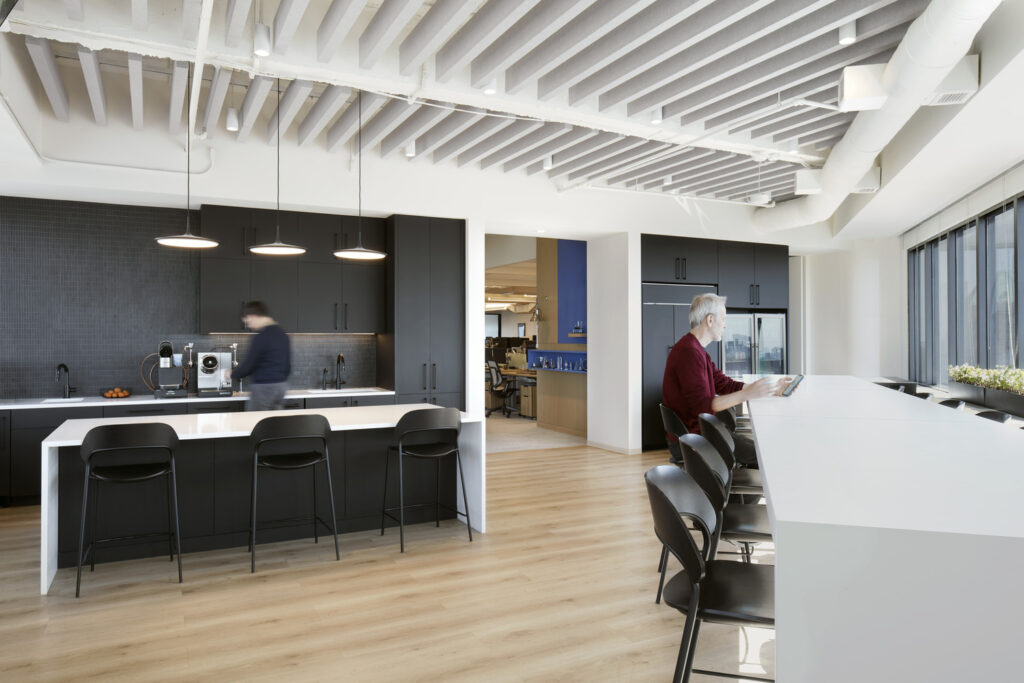
Capital Discipline in Practice
Capital discipline does not mean choosing the least expensive option. It’s about putting money where it actually moves the needle.
Sometimes that means removing friction: improving an inefficient arrival sequence, an outdated elevator experience, limited conferencing or another issue tenants encounter every day.
Sometimes it means pure perception: better lighting, clearer wayfinding, repaired finishes or a focused refresh that tells tenants the building is cared for.
And sometimes it’s doing what your target tenant cares about, instead of copy-pasting an amenity from the building down the street.
That distinction is especially important when every additional design decision has a construction cost and, ultimately, a question attached to it: Will this help us lease the building?
If not, there may be a better place to put the money.
When Location Isn’t Your Superpower
Location is still the best amenity, but not every asset has the strongest address, the newest building or the most obvious location advantage. For those assets, the building experience has to work harder.
Location gets you on the tour list. Experience closes the deal.
When location isn’t your primary leverage, every single physical touchpoint takes on extra weight. The arrival sequence, the lobby, the lighting, the bathrooms, the shared spaces, and the general sense of care, or lack thereof, become the entire value proposition.
These aren’t the vanity projects that win design awards, but they are the moments tenants experience every single day.
You need to know which moments create friction, which ones ruin a tour, and which fixes actually make a tenant say yes.

Let's Connect:
Joseph Schirripa, Principal | New York Market Leader & Regional Practice Leader, Asset Strategy
As the Regional Leader for Asset Strategy services in New York, Joseph drives the team for continued growth and success in the practice. A believer in developing genuine relationships through listening, collaboration, communication and sharing of his own values, he brings a wide range of expertise, from interior architecture and design to project management. Joseph has a Bachelor of Science in Interior Architecture from The Art Institute of Pittsburgh.
