The Hidden Cost of Locked Merchandise
By: Ray Ehscheid
On a recent trip to a national drugstore chain, I found myself standing in front of a locked glass case waiting to buy toothpaste. I pressed the assistance button, a faint chime sounded somewhere in the store, and a few minutes later an associate arrived with a ring of keys to retrieve the product. The entire interaction took less than five minutes, but the experience felt surprisingly disproportionate to the purchase.
Scenes like this are becoming familiar across retail. Walk through many big-box stores today and you will find entire aisles behind glass: everyday items such as deodorant, laundry detergent, cosmetics, and razor blades secured like high-value electronics once were. The strategy is understandable. Retail theft has become one of the industry’s most visible operational challenges. According to the National Retail Federation, retailers reported more than $121 billion in shrink in 2023 (NRF, 2025), with theft accounting for a growing share of that total.
Retailers are navigating a structural tension between reducing shrink and delivering a frictionless customer experience. The industry’s default response often addresses one side of that equation at the expense of the other.
At NELSON Worldwide, we work closely with retailers navigating this exact tension. The challenge is not simply how to reduce theft. It is how to do so without undermining the experience that brings customers into the store in the first place. That raises a more difficult question: what if the measures designed to reduce theft are quietly costing more than the theft itself?
When Security Creates Friction
Retail has always balanced openness with control. For decades, retailers managed that balance through layout, merchandising, and staff presence. Today, the pendulum has shifted noticeably toward restriction, and consumers are feeling the difference. Research conducted by A Closer Look found that 65 percent of shoppers identify locked merchandise as their single biggest in-store frustration, while nearly half say it makes the shopping experience significantly less convenient. More troubling, nearly 45 percent report that they will leave the store and purchase the item online instead, often from competitors such as Amazon (A Closer Look, 2024).
This shift strikes at the heart of physical retail’s advantage: the ability to walk in, select a product, and leave within minutes. When a shopper must locate an associate, wait for a case to be unlocked, and escort the item to checkout, that advantage disappears. Retail leaders have acknowledged this. Tim Wentworth noted on a recent earnings call that locked cases had reduced sales in certain Walgreens categories (CBS, 2025), and anti-theft firm Indyme estimated sales decline 15 to 25 percent in categories placed behind locked displays (Axios, 2023).
There is also a perception cost. Research from A Closer Look shows that more than 70 percent of shoppers interpret extensive security measures as evidence that theft is common in the store (A Closer Look, 2024). Rather than reassuring customers, these environments signal that something is wrong.
The Economics of Retail Friction
The financial implications extend beyond a single abandoned purchase. Studies indicate that 30 to 40 percent of intended purchases fail to convert when customers encounter locked products and cannot immediately retrieve them (CX Dive, 2024). Customer patience is remarkably limited; when shoppers must wait longer than roughly sixty seconds for assistance, abandonment rates increase sharply. At the same time, operational studies referenced in Loss Prevention Magazine suggest that store associates may spend between 8 and 12 percent of their time responding to unlock requests, pulling time away from customer engagement, merchandising, and sales support (Loss Prevention Magazine, 2024).
Taken together, these dynamics reveal a consistent pattern. Locked merchandise reduces conversion by as much as 30 to 40 percent. Associate time is diverted, with as much as 8 to 12 percent spent unlocking cases rather than selling. And when customers wait more than a minute for assistance, abandonment rises sharply.
What is often overlooked is that not all loss prevention strategies function the same way. Some introduce friction that slows the customer journey. Others shape the environment itself, reducing opportunity without restricting access. That distinction is where design becomes critical.
Why Big-Box Retail Feels the Pressure Most
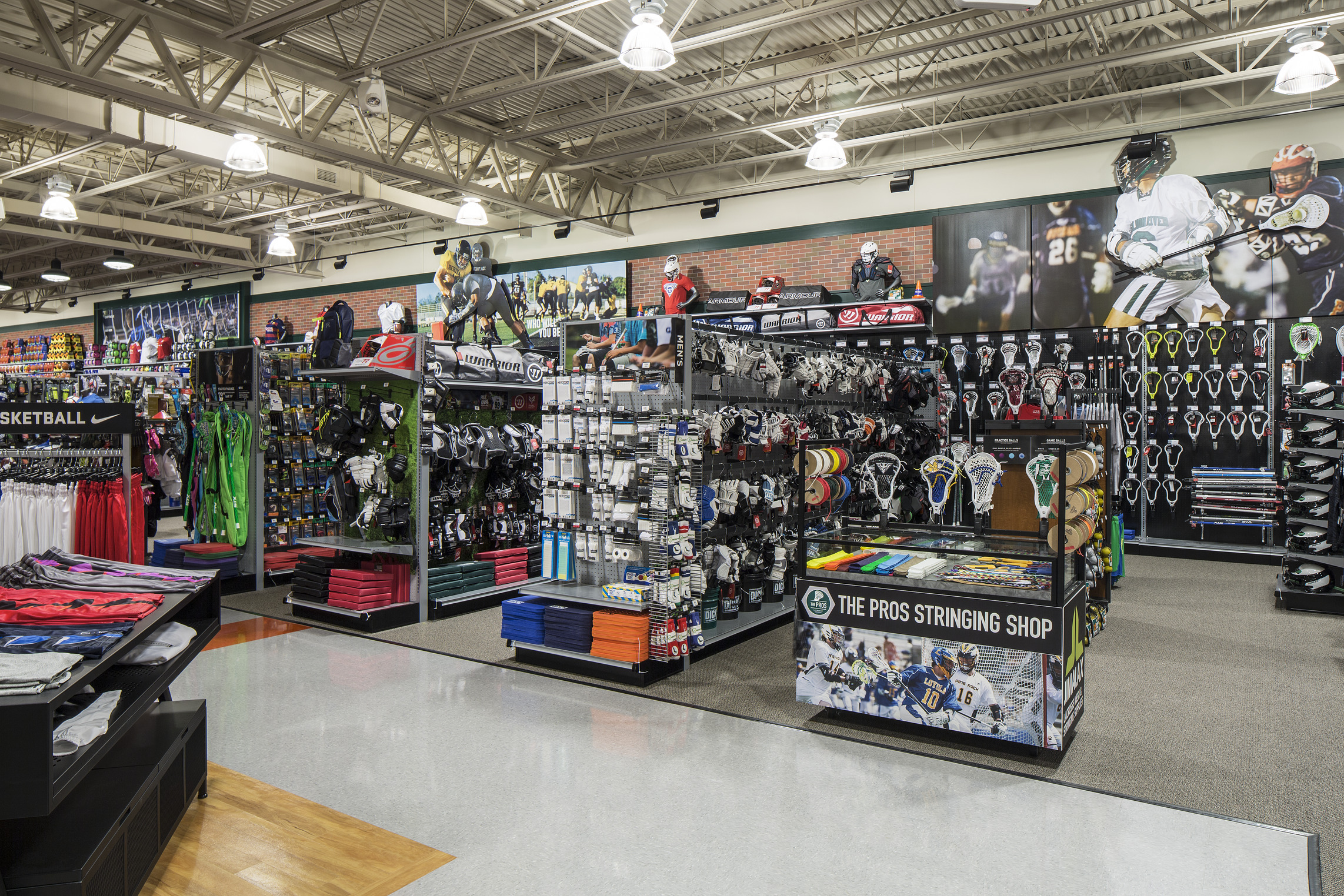
The challenge is particularly acute for large-format retailers. Big-box stores operate at a scale that creates inherent conditions for theft: vast floor areas, long aisles that interrupt visibility, and staffing levels that rarely scale with store size. The instinctive response is to add restrictions, but each layer of security introduces more friction. For retailers working to reinvent their stores as destinations through curated assortments and immersive environments, this tension can undermine the very strategies designed to attract customers.
When Design Becomes the Solution
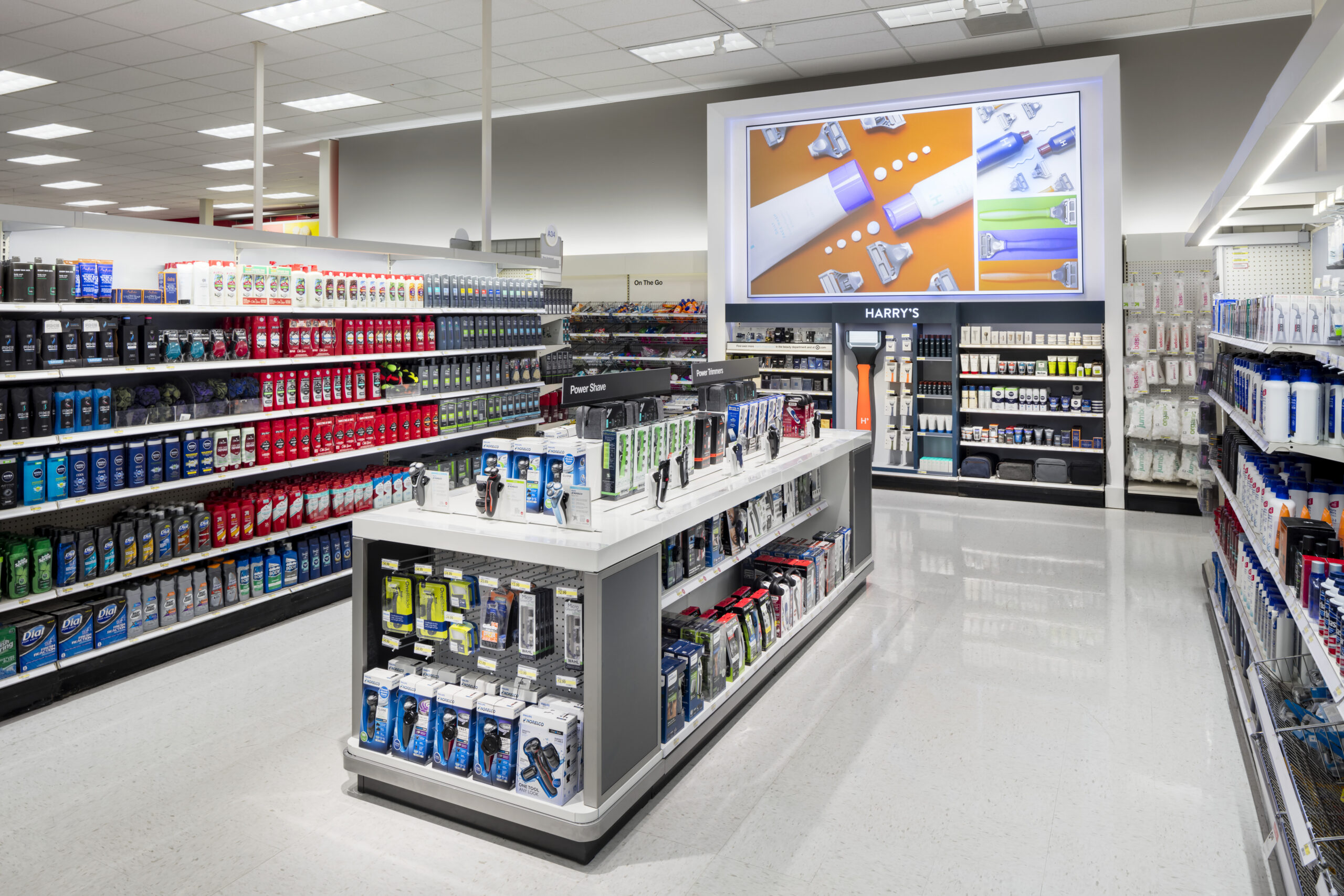
There is another way to approach loss prevention, one that relies less on barriers and more on the design of the environment itself. Walk into a well-designed store and you may not notice anything explicitly perceived as “security,” yet the environment is doing the work. Sightlines are open, allowing staff to see across departments. High-value products are positioned near active zones rather than isolated aisles. Lighting is even and consistent. Circulation paths are intuitive, reducing hidden corners and dead zones.
These spaces feel easy to shop, but they are carefully structured to reduce anonymity and increase visibility.
This approach is grounded in a well-established framework known as Crime Prevention Through Environmental Design, or CPTED (Armtiage, 2018). Rather than restricting access, it focuses on shaping environments that naturally discourage undesirable behavior. In retail, the principles are straightforward: make activity visible, place people in proximity to product, and encourage interaction between customers and staff. Security becomes part of the environment instead of an added layer on top of it.
Rethinking the Economics of Loss Prevention
Retail theft will remain a challenge. No design strategy will eliminate it entirely. But when security measures suppress conversion, divert labor, and erode experience, the true cost becomes difficult to ignore. A locked case that prevents fifty thousand dollars in annual theft but reduces sales by even a small percentage in a multi-million-dollar category may ultimately solve the wrong problem.
The most forward-looking retailers are beginning to rethink loss prevention as a spatial and experiential strategy, not just an operational one.
At NELSON Worldwide, we see our clients beginning to shift their approach. The focus is moving away from restriction and toward environments shaped by visibility, interaction, and thoughtful planning. Loss prevention is no longer viewed solely as an operational challenge. It is increasingly understood as a design opportunity. The goal is not simply to stop theft. It is to protect the value of the store itself.
Because the most effective loss prevention strategy does not look like security. It looks like a store in which people want to shop.

Let's Connect:
Ray Ehscheid, Practice Strategy Leader, Retail
Ray holds more than 25 years of dynamic leadership experience in creating award-winning interiors with projects spanning workplace, retail, financial services and tradeshow exhibit design. He’s been a key partner with of a diverse group of global brands, including financial services, department and luxury store environments, and consumer products and services. Passionate about retail design especially focused upon his home city of New York, Ray and his work have been featured in national and international publications; he has delivered keynotes, moderated and participated on panels at major industry events, has juried design competitions and has contributed guest columns for design industry publications. Ray is a member of the Advisory Panel of ICFF, the Editorial Advisory Board of Retail TouchPoints Network, where he has been recognized as a Global Influencer, and currently is International Chairman of the Retail Design Institute (RDI), having previously served as International President. Reach out to Ray at rehscheid@nelsonww.com
