Retail design in 2026 is being pulled forward by a simple reality: the customer journey is no longer linear, the operating model is no longer stable, and the store is no longer the “end point” of commerce. NRF’s 2026 Big Show signals a pivot from retail environments as destinations to retail environments as dynamic systems that orchestrate discovery, decision-making, fulfillment, and human connection in real time.
The most fundamental shift starts before a customer ever arrives. AI is now shaping early consideration and narrowing choices upstream, which means customers increasingly enter physical spaces with a shortlist, a price expectation, and a confidence threshold already in motion. The store’s job is less about persuasion and more about validation: helping people confirm fit, feel, quality, and “best for me” logic. In practice, that changes what wins in-store. It elevates the role of guided experiences, service moments, and consultative engagement, and it demands environments that can translate digital intent into physical clarity without friction.
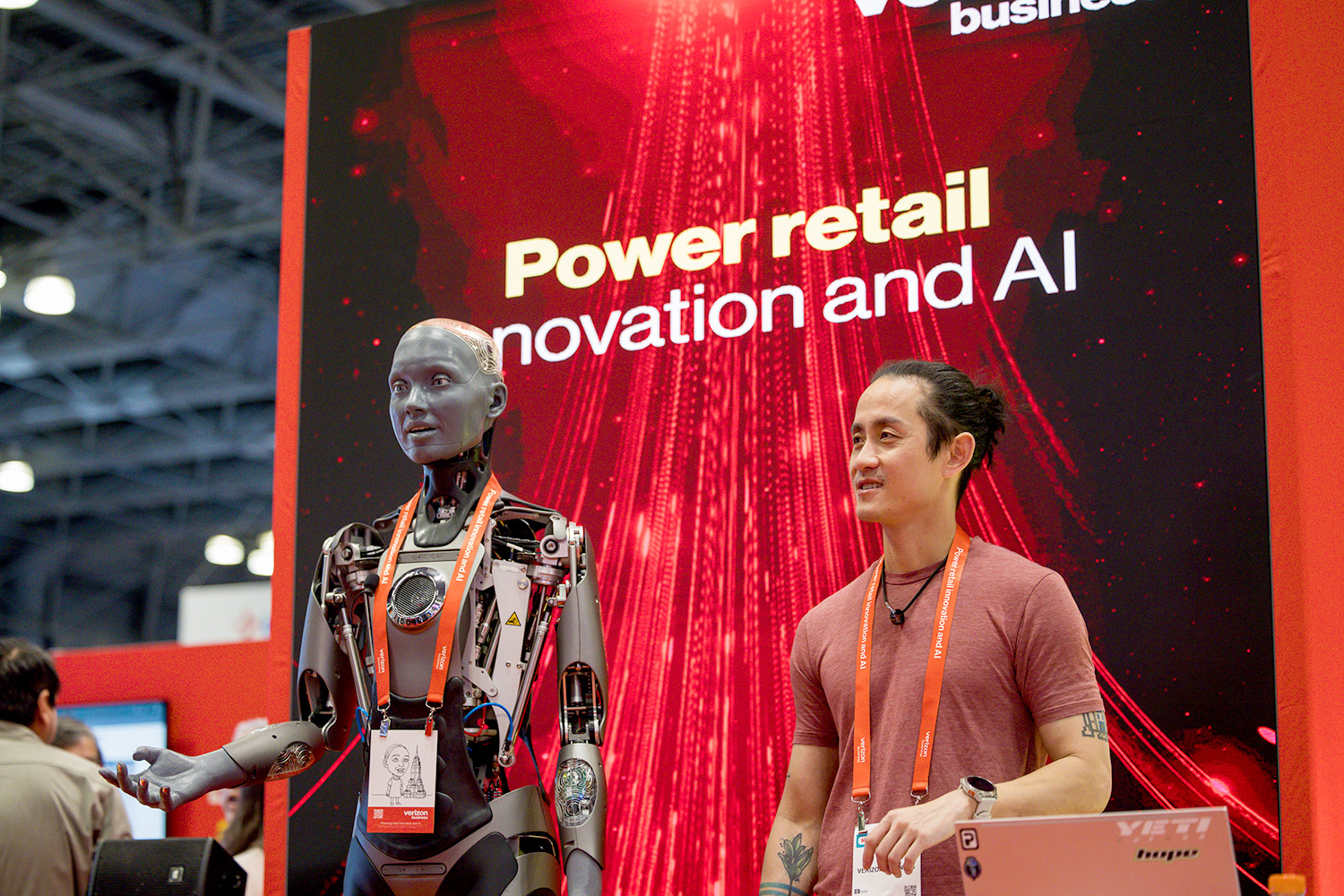
At the same time, agentic AI is moving from experiment to infrastructure, influencing decisions across pricing, inventory allocation, promotions, labor scheduling, and supply chain execution. That forces a design reset. Stores and support spaces must be built for variability, because the rules of retail operations are being rewritten continuously by automation and decision engines. Flexibility is no longer a nice-to-have; it is a core design performance metric. Back-of-house, micro-fulfillment, pickup and returns, and inventory agility become spatial priorities, and governance becomes part of design: how information is surfaced, how exceptions are handled, how trust is maintained when systems act autonomously.
Against that tech acceleration, NRF also points to something human: experience is back, but it has evolved. The resurgence of malls and destination environments isn’t driven by spectacle alone. It’s driven by the need for real-world connection, discovery, and emotional lift in a culture saturated by screens. In 2026, “experience” succeeds when it is purposeful: it clarifies the brand, reduces customer uncertainty, and creates a reason to stay, explore, and return. The best environments will feel immersive but not wasteful, memorable but not gimmicky, and they will be built to change fast: modular, programmable, and operationally sustainable.
That human layer matters even more because consumer motivation is increasingly emotional rather than purely economic. NRF signals that spending behavior can remain resilient even when confidence is mixed, because people buy for joy, identity, community, and small moments of reward. Retail design has to respond with environments that feel culturally tuned, welcoming, and authentic. This is where materiality, storytelling, sensory cues, and hospitality behaviors become strategic tools. In a world where algorithms compress choice, physical space becomes one of the few places a brand can create felt differentiation.
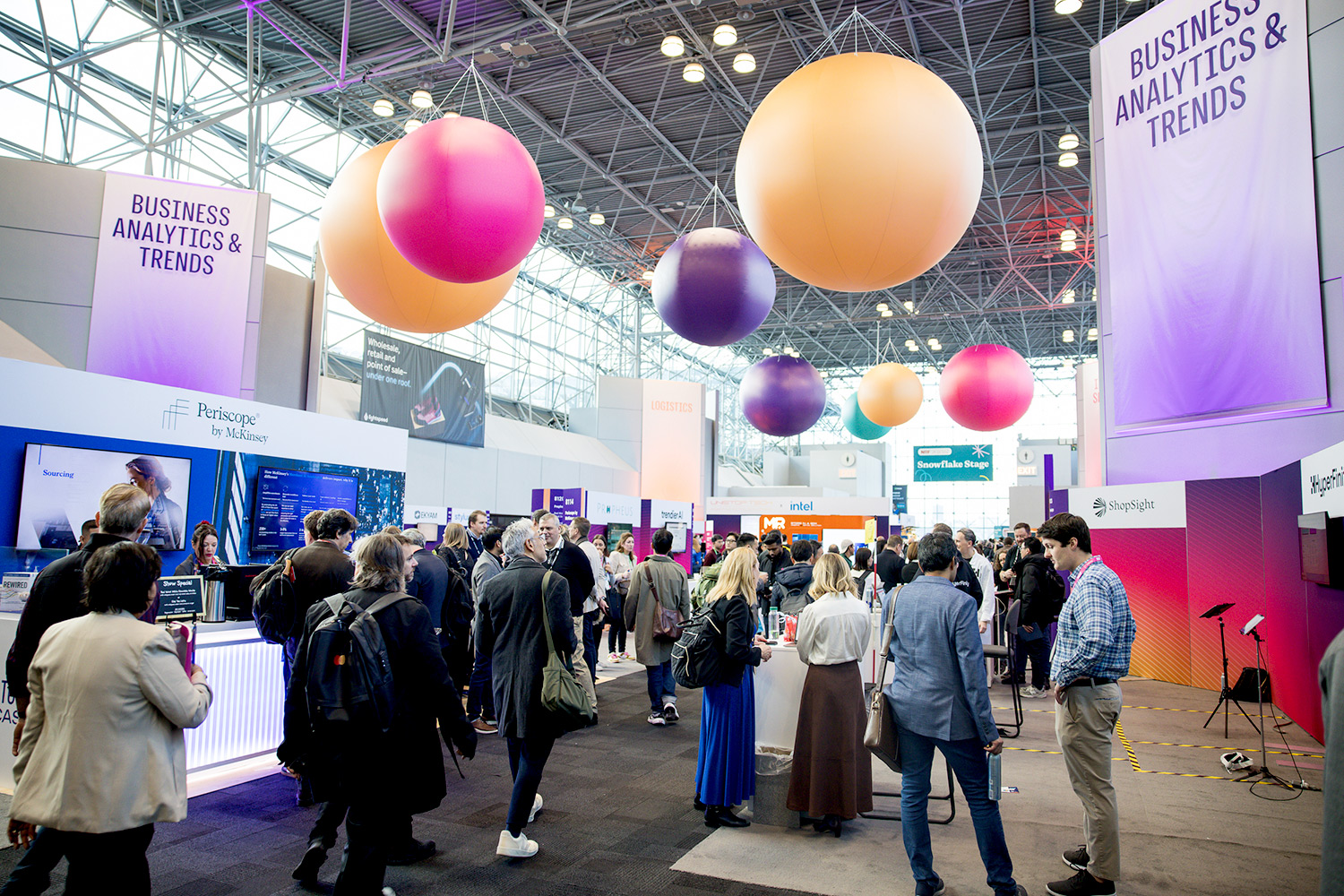
Meanwhile, the operational realities of 2026 are intensifying, and they are spatial problems. Circularity is expanding from a sustainability initiative to a business model: recommerce, repair, refurbishment, and resale require dedicated adjacencies, processing flows, secure storage, and customer-facing touchpoints that don’t dilute the core brand. Security is evolving too, as organized retail crime and fraud become more sophisticated and more cross-channel. Design has to integrate deterrence and visibility without turning stores into fortresses, and it must support the operational choreography of prevention, evidence capture, and response. Layered onto all of this is the workforce: automation changes roles, flexibility becomes a talent expectation, and retail environments must support training, ergonomics, safety, and better day-to-day experience for employees who are asked to do more complex work.
Finally, scale and governance sit underneath everything. In 2026, retailers don’t win by launching one great concept; they win by turning innovation into a repeatable system without brand drift. That pushes retail design toward platform thinking: prototype governance, modular kits of parts, standardized infrastructure, and clear decision rights that allow speed while preserving quality. The store becomes a consistent brand and operational framework that can flex by market, format, and mission, rather than a one-off expression that breaks when scaled.
Put together, these six forces describe a cohesive narrative: retail design in 2026 is about building environments that can keep pace with AI-shaped customer behavior, operate intelligently under continuous change, deliver purposeful experience, connect emotionally, solve new operational pressures, and scale with discipline. The store is no longer simply “a place to buy.” It’s where decision-making is completed, trust is earned, and the retail operating model becomes tangible.